Jungle Questions
1. Sinclair believed that to succeed in Packingtown, a person must be conniving, disloyal, and the sort of person who would spy on his coworkers and rat them out to the bosses. All-in-all, Packingtown was a dog-eat-dog world where the winners were the ones who brought down all their competition.
2. According to the passage, the plant owner's main goal is to make as much money as possible and lose the absolute minimum in the process, regardless of the methods required.
3. When Sinclair says, "...there was no place in it where a man counted for anything against a dollar...," he means that making money took precedence over anything involving the workers. If there was a way to save money, but it would endanger the workers, the plant manager would do it. If the choice was between the workers being happy and save or making money, making money would be chosen, not matter how small the profit.
Regulation of Pharmaceuticals
The Food and Drug Administration of the USA has strict regulations on the testing, productions, and marketing of pharmaceuticals. The individual ingredients of each new drug must be tested. The ingredients and their reactions will be thoroughly evaluated. After evaluation and approval, animal trials can be started. The drugs are tested on several varieties of animals in several different forms. If the animal trials are passed, human trials may begin. If human trials pass and the drug is found to be successful in doing what it was intended to do, it can be approved by the FDA for marketing towards humans. Overall, the entire process of pharmaceutical approval is quite rigorous.
Tuesday, December 10, 2013

Tuesday, November 19, 2013
The Sinking of the Maine
1) The Sinking of the Maine
Event overview:
Worried about the fragile state of Cuba (and its sugarcane farms), the United States sent the U.S.S Maine to Havana harbor to act as a protector, watcher, and warning. On February 15th, 2898, an explosion sunk the Maine and killed 266 Americans. Spanish-American tensions had already been high, but the explosion caused immediate alarm. A Court of Inquiry was sent out to investigate the cause of the explosion, but many Americans and officials were quick to point fingers at Spain. The investigation found the explosion to have come from outside the Maine, which suggested that Spain could have done something to cause it. Well, despite a heavy lack of evidence, Spain was declared the perpetrator and a war began that would secure America's position as world power and help it begin an Imperialist empire.
A quote from Commander George A. Converse during the 1898 inquiry into the cause of the explosion in the Maine: "Indications are than an underwater explosion produced the conditions..."
A quote from Admiral H.G. Rickover's conclusion during the 1976 re-examination: "The mines available in 1898 are believed to have been incapable of igniting the Maine...It is most unlikely that the Maine explosion was indeed initiated by a mine... The available evidence is consisten with an internal explosion alone..."
To summarize the Admiral, the investigation in 1976 found that the explosion happened inside the Maine, and was likely due to a fire in a coal bunker.
Pros and Cons - Spanish Sinking Maine
Pros:
Allowed America to intervene in Cuba
Gave Americans an excuse to go to war with Spain
Let U.S claim Puerto Rico, Guam, and the Philippines
Cuba freed of Spanish rule
Established America as Imperialist World Power
Cons:
War and camps killed thousands
Filipinos in concentration camps again
Cuba on a short American leash
Rebels in each country are backstabbed by Americans
Began American Imperialism (Can be seen as a con in modern context)
Pros and Cons - Modern Investigation Findings
Pros:
History won't show Spain as the aggressor
Spanish don't need to feel bad
Cons:
USA did not have a viable reason for war
Makes the USA look bad
USS Maine prior to sinking:

USS Maine after sinking:

Sources:
The American Vision, Pages: 303-307, 308 - 309, http://www.spanamwar.com/maine.htm, http://commons.wikimedia.org/wiki/File:USS_Maine_h60255a.jpg,
Event overview:
Worried about the fragile state of Cuba (and its sugarcane farms), the United States sent the U.S.S Maine to Havana harbor to act as a protector, watcher, and warning. On February 15th, 2898, an explosion sunk the Maine and killed 266 Americans. Spanish-American tensions had already been high, but the explosion caused immediate alarm. A Court of Inquiry was sent out to investigate the cause of the explosion, but many Americans and officials were quick to point fingers at Spain. The investigation found the explosion to have come from outside the Maine, which suggested that Spain could have done something to cause it. Well, despite a heavy lack of evidence, Spain was declared the perpetrator and a war began that would secure America's position as world power and help it begin an Imperialist empire.
A quote from Commander George A. Converse during the 1898 inquiry into the cause of the explosion in the Maine: "Indications are than an underwater explosion produced the conditions..."
A quote from Admiral H.G. Rickover's conclusion during the 1976 re-examination: "The mines available in 1898 are believed to have been incapable of igniting the Maine...It is most unlikely that the Maine explosion was indeed initiated by a mine... The available evidence is consisten with an internal explosion alone..."
To summarize the Admiral, the investigation in 1976 found that the explosion happened inside the Maine, and was likely due to a fire in a coal bunker.
Pros and Cons - Spanish Sinking Maine
Pros:
Allowed America to intervene in Cuba
Gave Americans an excuse to go to war with Spain
Let U.S claim Puerto Rico, Guam, and the Philippines
Cuba freed of Spanish rule
Established America as Imperialist World Power
Cons:
War and camps killed thousands
Filipinos in concentration camps again
Cuba on a short American leash
Rebels in each country are backstabbed by Americans
Began American Imperialism (Can be seen as a con in modern context)
Pros and Cons - Modern Investigation Findings
Pros:
History won't show Spain as the aggressor
Spanish don't need to feel bad
Cons:
USA did not have a viable reason for war
Makes the USA look bad
USS Maine prior to sinking:
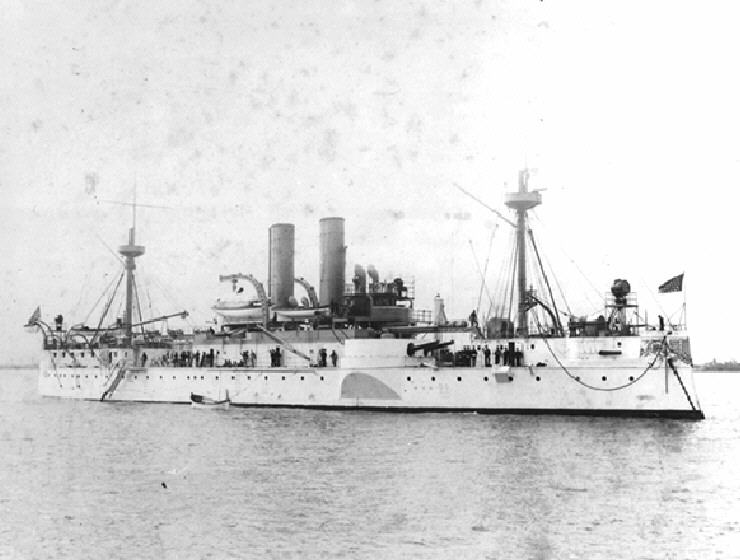
USS Maine after sinking:
Sources:
The American Vision, Pages: 303-307, 308 - 309, http://www.spanamwar.com/maine.htm, http://commons.wikimedia.org/wiki/File:USS_Maine_h60255a.jpg,

Tuesday, October 22, 2013
The Invention of The Fountain Pen
The Fountain Pen - Savior of the World
Today, one of the most important inventions in history will be explored. Without a doubt, the most fascinating tool to ever be created is... the fountain pen. With certainty, one can say that wars would have been fought for the ownership of the top tier of fountain pens, had the countries of the world not been pre-occupied with other, clearly far-less important issues like disease, economy, and railroads. Today, the history, usage, and impact of the fountain pen will be explored, while making connections to other significant creations of the time.
 Starting with the basics, fountain pens are writing utensils. From its inception, what differentiated the fountain pen from the common quill-and-ink was a metal body and a built-in ink supply. The fountain pen was revolutionary in that it had its own ink reservoir that continually leaked to the nib (tip) of the pen, eliminating the need to constantly dip the nib into an ink pot. The earliest known fountain pen design is from 1702 (around the time that Savery came out with his steam engine), credited to M. Bion, a Frenchman (no doubt a source of national pride residing in the hearts of all citizens of modern France). Sadly, the early incarnations of the glorious fountain pen had their faults that made them impractical, like ink spills. The first widely-usable and completely practical fountain pen was patented in 1884 by Lewis Waterman, a former insurance broker who destroyed a contract due to his pen leaking.
While Waterman would die in 1901 before his pen truly took off, his nephew continued the business. Through a series of wise decisions, Waterman's nephew increased the sales of the Waterman fountain pen to 350,000 pens a year. Their dependable nature was definitely noted, and it is possible to project that Waterman's fountain pen saved the world. Just think, what if other, more valuable contracts were destroyed by ink spills? Depending on the documents, whole economies could have collapsed and the world could have plunged into war. What if a key strategical alliance (or trade agreement) between, say, Japan and England was desecrated by an ink spill? Both sides would see it as a bad sign and cut off the agreement. Should such a thing happen on a large scale, millions could be out of work or even dead. The Treaty of Versailles itself, one of the most important documents in history, was signed by a solid gold Waterman fountain pen.
All good things must come to an end, however. Within five years of the arrival of the accursed ballpoint pen, sales of the fountain pen collapsed. Just like history itself (chunks of which were recorded with fountain pens), fountain pens became an obscure collector's item, overshadowed by newer and more efficient designs.
Here is a video that shows a modern Waterman fountain pen in action
Sources so far: http://inventors.about.com/library/weekly/aa100897.htm
http://www.collectorsweekly.com/articles/an-interview-with-vintage-fountain-pen-collector-jim-mamoulides/
Today, one of the most important inventions in history will be explored. Without a doubt, the most fascinating tool to ever be created is... the fountain pen. With certainty, one can say that wars would have been fought for the ownership of the top tier of fountain pens, had the countries of the world not been pre-occupied with other, clearly far-less important issues like disease, economy, and railroads. Today, the history, usage, and impact of the fountain pen will be explored, while making connections to other significant creations of the time.
Starting with the basics, fountain pens are writing utensils. From its inception, what differentiated the fountain pen from the common quill-and-ink was a metal body and a built-in ink supply. The fountain pen was revolutionary in that it had its own ink reservoir that continually leaked to the nib (tip) of the pen, eliminating the need to constantly dip the nib into an ink pot. The earliest known fountain pen design is from 1702 (around the time that Savery came out with his steam engine), credited to M. Bion, a Frenchman (no doubt a source of national pride residing in the hearts of all citizens of modern France). Sadly, the early incarnations of the glorious fountain pen had their faults that made them impractical, like ink spills. The first widely-usable and completely practical fountain pen was patented in 1884 by Lewis Waterman, a former insurance broker who destroyed a contract due to his pen leaking.While Waterman would die in 1901 before his pen truly took off, his nephew continued the business. Through a series of wise decisions, Waterman's nephew increased the sales of the Waterman fountain pen to 350,000 pens a year. Their dependable nature was definitely noted, and it is possible to project that Waterman's fountain pen saved the world. Just think, what if other, more valuable contracts were destroyed by ink spills? Depending on the documents, whole economies could have collapsed and the world could have plunged into war. What if a key strategical alliance (or trade agreement) between, say, Japan and England was desecrated by an ink spill? Both sides would see it as a bad sign and cut off the agreement. Should such a thing happen on a large scale, millions could be out of work or even dead. The Treaty of Versailles itself, one of the most important documents in history, was signed by a solid gold Waterman fountain pen.
All good things must come to an end, however. Within five years of the arrival of the accursed ballpoint pen, sales of the fountain pen collapsed. Just like history itself (chunks of which were recorded with fountain pens), fountain pens became an obscure collector's item, overshadowed by newer and more efficient designs.
Here is a video that shows a modern Waterman fountain pen in action
Sources so far: http://inventors.about.com/library/weekly/aa100897.htm
http://www.collectorsweekly.com/articles/an-interview-with-vintage-fountain-pen-collector-jim-mamoulides/
Tuesday, October 15, 2013
Summary of the Impacts of the Transcontinental Railroad (TCRR)
By: Henry Allen
The TCRR seriously impacted America
in numerous ways. Despite not being as successful as expected, it opened
America up to itself through easier travel, exchange of ideas, and the
resulting rail offshoots (although Natives were a bit doomed from the start).
The TCRR was not as successful as it
was predicted to be. The TCRR was supposed to be the transportation feat of the
century, but it wasn't About six months after it was completed, Egypt finished
the Suez Canal, which made the USA even less necessary for Asian-European
trade. The TCRR was still highly regarded, but not nearly as much as was hoped.
America was opened up to itself
through the TCRR. All of a sudden, it was easy to travel from the east coast to
the west coast, with some stops in between. It only took a few days, and the
railroad was safe and reliable, not nearly as dangerous as a regular land or
sea route would have been. The ease of travel allowed Easterners and Westerners
to see each other’s land, and exchange ideas. A book published in Boston could
end up in San Francisco in a week. Additionally, the faster transcontinental
travel allowed goods normally only found in the east to be easily transferred
to the west, and vice-versa.
Have one massive centered railroad
in the form of the TCRR was the first step. Eventually, offshoots sprung up on
the rails that could direct trains areas the TCRR didn't go through. The result
was that a web of rails crossed through massive chunks of the USA, allowing
even easier travel, trade, and exchange of ideas.
As with most of early US history,
the Natives took it in the shorts. The TCRR needed a lot of land, a lot of cleared land. So, treaties were made and
the natives were moved further out of the way. The resulting webs of rails
required more land, so treaties were again renegotiated and the natives were
moved to smaller reservations. Along with the webs of rails came hunters and
sportsmen, who ended up mass-slaughtering the buffalo herds that the natives
depended on.
To
summarize further:
The TCRR
encouraged reliable, safe trade and travel, allowing for exchange of ideas. It wasn't as popular as people thought it would be, but it still made tons of
money. It set a precedent for other rails to expand off of, and the Natives
ended up in rather small reservations with even smaller hers of buffalo to
depend on.
Source: http://www.pbs.org/wgbh/americanexperience/features/general-article/tcrr-impact/
Source: http://www.pbs.org/wgbh/americanexperience/features/general-article/tcrr-impact/
Subscribe to:
Comments (Atom)